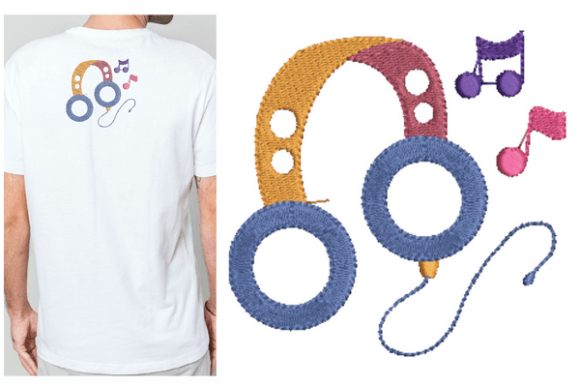
Reviewing Musical Headphone Embroidery Designs for Merch
As an embroidery designer who has spent years digitizing files and consulting with small business owners, I approach every new machine embroidery design with a critical eye. It is not just about whether the image looks cute on a screen; it is about how that digital asset translates into a tangible, durable, and profitable finished product. Recently, I evaluated the Musical Headphone Embroidery Designs collection to determine its viability for branded merchandise, staff uniforms, and boutique retail items. This review focuses on practical application for apparel decorators, Etsy sellers, and craft entrepreneurs looking to elevate their brand through high-quality custom apparel and accessories.
First Impressions and Visual Personality
The initial appeal of the Musical Headphone Embroidery Designs lies in its versatility. The description notes that this wonderful design can be beautifully embroidered on any fabric you like to work with, suggesting a flexible digitization strategy. Visually, the motif strikes a balance between modern tech culture and classic musical appreciation. It feels playful yet professional, making it suitable for a wide range of industries beyond just music stores. For a creative studio, a trendy café, or a boutique electronics shop, this design offers a friendly and approachable aesthetic. It does not scream "loud rock concert" but rather suggests a love for audio quality and artistic expression, which aligns well with brands that value craftsmanship and lifestyle appeal.
Real-World Applications for Small Business Merch
When considering how to integrate these designs into your inventory, the possibilities are extensive. Here is how I envision these files performing in real business scenarios:
- Embroidered Patches: This is perhaps the strongest use case. A well-digitized headphone icon makes for an excellent iron-on or sew-on patch. You can sell these as standalone design assets or use them to brand your own packaging. They add a tactile, premium feel to mail-order products.
- Staff Uniforms and Aprons: For coffee shops or record stores, embroidering this design on the chest pocket of an apron embroidery project creates instant team cohesion. It serves as a subtle badge of expertise without being overly corporate.
- Cap Embroidery: Placing a simplified version of the design on the front panel of a baseball cap is a popular trend. However, attention must be paid to the curvature of the cap to ensure the design does not distort.
- Tote Bag Design: Canvas tote bags are a staple for handmade brands. Adding this colorful look to a bag transforms a simple carrier into a walking advertisement for your shop or a customer’s personal style.
- Home Decor and Gifts: As mentioned in the product details, these designs work on pillows and towels. For a bed-and-breakfast or a rental property owner, branded linens with a subtle musical theme can enhance the guest experience.
Technical Considerations and Production Notes
While the promise that the design works on any fabric is appealing, experienced embroiderers know that technique matters. Before running a full production batch, you must address several technical factors to ensure quality.
First, consider stitch density. If the design is too dense, it may cause puckering on lightweight fabrics like t-shirts or silk scarves. Conversely, if it is too sparse, it may not cover dark uniforms effectively. Always run a test stitch-out on the actual material you intend to use. For darker fabrics, you may need to adjust thread colors or use an underlay stabilizer to ensure the design pops.
Second, evaluate the hoop size compatibility. Ensure that the design fits within your machine’s maximum hoop dimensions, especially if you plan to create larger patches or back-of-jacket logos. If the design includes fine details or tiny lettering, verify that these elements will not merge or break during stitching. Small details often get lost in embroidered patch production if the resolution is not optimized for the specific thread weight being used.
Third, pay attention to stabilizer selection. The type of fabric dictates the stabilizer. Cut-away stabilizers are generally better for garments that will be washed frequently, while tear-away might suffice for home decor items like pillows that see less abrasion. Ignoring this step can lead to a distorted finished product that reflects poorly on your brand.
Impact on Brand Identity and Customer Trust
In the world of small business merch, consistency is key. Using a cohesive set of designs like the Musical Headphone Embroidery Designs helps build a recognizable brand identity. When customers see the same high-quality embroidery on your tote bags, caps, and staff shirts, it reinforces professionalism. It signals that you care about the details, which builds trust.
Furthermore, handmade products with custom embroidery carry a higher perceived value than printed alternatives. Embroidery adds texture and depth that ink cannot replicate. This tactile quality encourages buyer engagement and can justify a higher price point for your small business merch. Whether you are selling directly to consumers or creating B2B promotional items, the durability of embroidery ensures your brand remains visible long after the item is purchased.
Practical Designer Checklist
Before you commit to using these files for commercial projects, follow this checklist to mitigate risk and maximize quality:
- Test in Black and White: Convert the design to monochrome in your software to check for contrast issues. If the design relies solely on color to define shapes, it may fail on single-color uniforms.
- Check Scalability: Resize the design to the smallest intended application, such as a left-chest logo. Ensure lines remain clear and do not become too thin to stitch reliably.
- Review Thread Colors: Match the digital thread colors to your physical inventory. A mismatch can ruin the visual impact of the custom apparel.
- Inspect Spacing: Look for areas where stitches might overlap excessively or where jump stitches are too long, which could cause threading issues.
- Create a Printable Mockup: Use digital mockups to show clients or stakeholders how the design will look on different items before stitching a sample. This saves time and materials.
- Confirm Licensing: Although the description implies broad usage, always confirm the specific license terms of the digital embroidery file. Ensure you have the right to use it for commercial sales and not just personal projects.
Final Verdict
The Musical Headphone Embroidery Designs offer a solid foundation for businesses looking to add a creative, musical touch to their merchandise. With careful attention to fabric texture, stabilizer choice, and stitch optimization, these files can produce stunning results on everything from tote bag design projects to professional uniforms. By treating the design as a strategic brand asset rather than just decoration, you can enhance customer loyalty and drive sales through high-quality, tangible products. Remember, the success of the embroidery lies not just in the file itself, but in the skill and preparation of the operator. Take the time to test, refine, and perfect your process, and this design will serve your business well.